Toddler Nightmares: 5-Step Comfort Plan + Bedtime Fixes

What to Do When Your Toddler Has Nightmares: Practical Comforting Steps and Bedtime Solutions
Nightmares can leave toddlers frightened, clingy, and resistant to sleep—especially when they can’t fully explain what they saw or felt. A calm, repeatable response helps children feel safe in the moment and reduces the odds of a long bedtime battle. The ideas below focus on quick comfort at night, daytime prevention, and simple routines that support better sleep over time.
Nightmares vs. Night Terrors: Why the Difference Matters
Not all “scary nights” are the same. Knowing whether you’re dealing with nightmares or night terrors changes what helps—and what can accidentally make things worse.
- Nightmares typically happen in the second half of the night (during REM sleep). Toddlers often wake fully, cry, and seek comfort.
- Night terrors often occur earlier in the night. A child may look awake (crying, thrashing) but is hard to console and usually doesn’t remember it the next day.
- If your child can describe a scary dream or asks to avoid sleep because of a “bad dream,” it points more toward nightmares.
- Frequent episodes with snoring, breathing pauses, or extreme sleep disruption may warrant a pediatrician discussion to rule out underlying sleep issues.
Quick comparison: nightmares and night terrors
| Feature | Nightmares | Night terrors |
|---|---|---|
| Time of night | Often later (closer to morning) | Often earlier (first third of night) |
| Child wakes fully | Usually yes | Often no (appears awake but isn’t) |
| Consoling helps | Yes—comfort is effective | Limited—best to keep safe and wait it out |
| Memory next day | Often remembers some details | Usually no memory |
| Best immediate response | Reassure, validate, return to sleep | Keep safe, minimize stimulation, don’t force wake |
What to Do in the Moment: A Calm 5-Step Nighttime Response
When your toddler jolts awake scared, the goal is reassurance without accidentally “waking the house” emotionally. Try this simple sequence:
- Pause and regulate. Take one slow breath, keep lights dim, and use a quiet voice. A big reaction can signal that danger is real.
- Reassure safety with concrete cues. “You’re safe. I’m right here. You’re in your bed at home.” Specific details help their brain re-orient.
- Validate feelings without reinforcing fear. Say “That dream felt scary,” rather than confirming the dream as true or warning them to “watch out.”
- Offer simple soothing actions. A sip of water, a quick cuddle, a comfort object, or a brief back rub—then guide them back to lying down.
- Use a consistent closing script and exit plan. Repeat a short phrase nightly, then do a predictable step away (door cracked, check-in in 2 minutes).
If you’d like a benchmark for age-appropriate sleep (because overtiredness can intensify night wakings), the American Academy of Pediatrics’ sleep guidelines can help you sanity-check bedtime, naps, and total hours.
Comforting Phrases That Help (and What to Avoid Saying)
Words matter most when your toddler’s imagination is running the show. Keep scripts short, steady, and repeatable.
- Helpful scripts: “That was a scary dream. Dreams can’t hurt you. Your body is safe and you’re loved.”
- Grounding prompts: Ask them to name three safe things in the room (lamp, blanket, teddy). It anchors attention in the present.
- What to avoid: Long interrogations (“What did you see? Tell me everything.”) can intensify vivid recall and delay sleep.
- What to avoid: Big changes made at 2 a.m. (new sleep location, extra screen time, extended play) can turn nightmares into a pathway to rewards.
- If separation anxiety spikes: Use small “bravery steps”—sit by the bed briefly, then move to the doorway, then outside the room with planned check-ins.
Daytime Prevention: Reduce Nightmares Before Bedtime Starts
Nightmares can increase during growth spurts, big transitions, and phases of intense imagination. Small daytime adjustments often make bedtime feel safer.
For a deeper overview of how nightmares work and why they can cluster during certain phases, this plain-language guide from the Sleep Foundation is a helpful reference.
Bedtime Routine Fixes That Make Nights Smoother
When to Get Extra Support
A Practical Nightmares Plan for Parents Who Want a Step-by-Step Guide
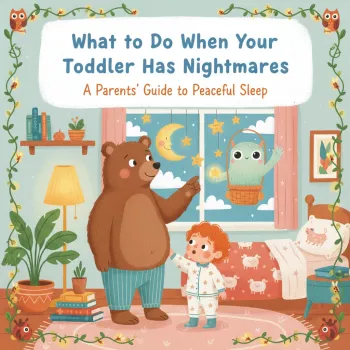
If you want a clear roadmap that bundles quick in-the-moment scripts, bedtime routine options, and prevention strategies in one place, consider: What to Do When Your Toddler Has Nightmares | Ebook Guide for Parents | Practical Comforting Tips & Bedtime Solutions.
For parents who are also juggling household resets after rough nights, these digital guides can be useful add-ons: Cleaning Rugs and Carpets Like a Pro | Digital Guide on How to Clean Carpets and Rugs | Printable Home Cleaning eBook for Beginners and Experts and Lightning Smarts: How to Spot Deals That Actually Save You Money | Digital Guide for Smart Shoppers, eBook, Checklist for Lightning Deals.
FAQ
How long do nightmares last in toddlers?
A single nightmare episode may last just a few minutes, but the fear can linger and make it hard to settle back down. Many nightmare phases fade over a few weeks with consistent comfort and a steady sleep routine; if they’re frequent for weeks or affecting daytime mood, check in with your pediatrician.
Should a toddler sleep in the parents’ bed after a nightmare?
Occasional exceptions can be fine, but repeated “sleep in our bed” nights can quickly become the new expectation. When possible, comfort your toddler in their room using a predictable script and a gentle return-to-bed plan so they learn that their bed stays safe.
What causes nightmares in toddlers?
Common triggers include overtiredness, stress or changes, illness or fever, exposure to scary media, and normal developmental leaps in imagination. Most toddler nightmares are a typical phase and improve with calming responses and consistent routines.














Leave a comment